Computex 2026: NVIDIA RTX Spark and Microsoft's New AI PCs
At Computex 2026, NVIDIA and Microsoft unveiled RTX Spark, a Windows-on-ARM AI chip built for on-device agents. Here's what was actually announced, the honest caveats, and what it means for Australian buyers.
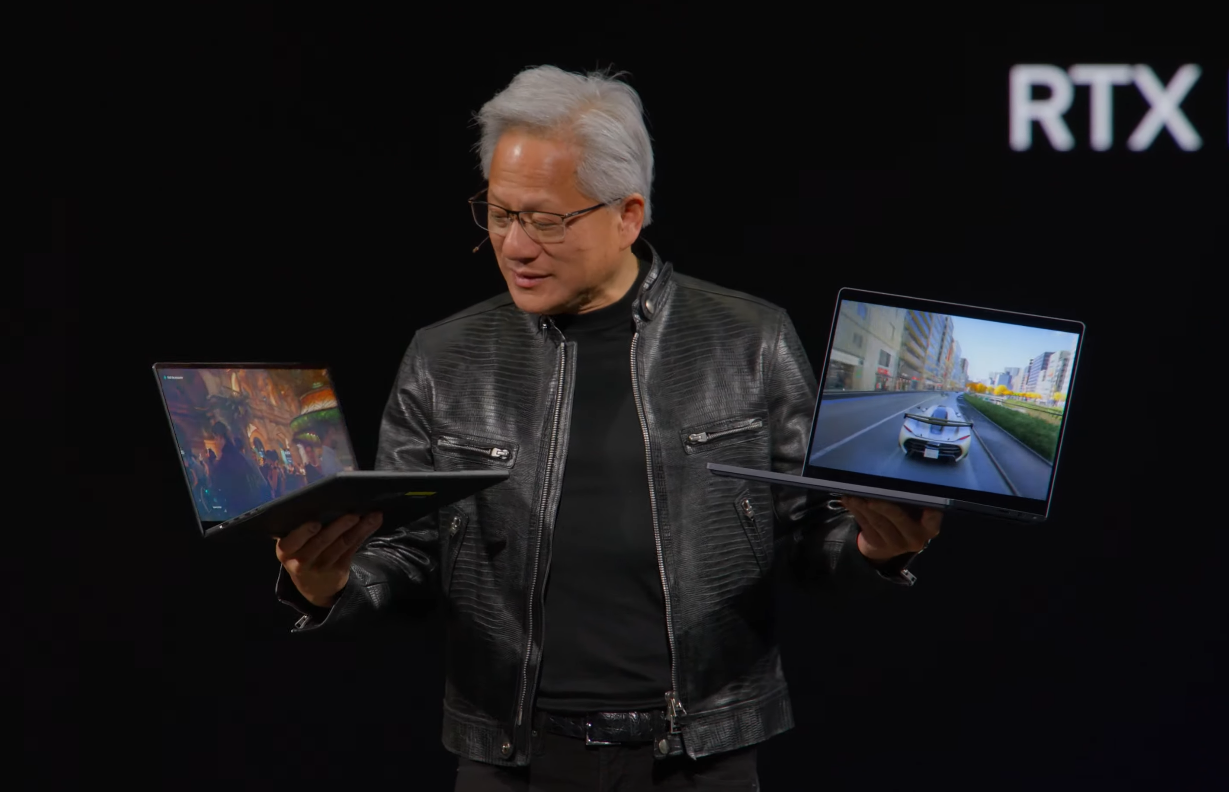
At Computex 2026 (GTC Taiwan), NVIDIA and Microsoft jointly unveiled RTX Spark, a chip built for Windows PCs and the personal AI agents that run on them. In Jensen Huang’s framing, the PC is being “reinvented.” The reality, as always, is more nuanced, so here is what was actually announced and the honest caveats for anyone in Australia thinking about buying one.
Heads up: This is a preview based on the Computex keynote and NVIDIA’s official announcement. RTX Spark machines are not on shelves yet (NVIDIA says they launch in late 2026), so there is no AU pricing or local stock to report. We will update this post as products and prices land.
What was announced
RTX Spark (chip codename “N1X”) is aimed at running serious AI locally rather than in the cloud. NVIDIA’s stated specs for the laptop-class part:
- ~1 petaflop of AI compute
- A Blackwell RTX GPU with 6,144 CUDA cores and fifth-gen Tensor Cores
- A 20-core NVIDIA Grace CPU, built in partnership with MediaTek and fused to the GPU over NVLink
- 128GB of unified memory
- Because the Grace CPU is Arm-based, RTX Spark runs Windows on Arm, not the x86 Windows most apps are built for
That big pool of unified memory is the genuinely interesting part: a normal consumer GPU gives you 16-32GB of VRAM, which is not enough for the largest local language models. 128GB changes what you can load and run on your own machine.
The Microsoft partnership
The software story is where Microsoft comes in. The two companies worked on how AI agents run on your own device:
- A Windows platform for agents with new security primitives for identity, containment and policy
- NVIDIA OpenShell, a runtime that lets agents (for example coding agents) act on your machine under user-defined policies
- Agent access wired into Windows itself
The hardware
RTX Spark shows up first in slim laptops from across the industry: ASUS, Dell, HP, Lenovo, Microsoft Surface and MSI, with more to follow. NVIDIA also showed mini PC and desktop/workstation variants, with the top desktop tier scaling to far more memory than the laptops. On the creative side, NVIDIA says Adobe is rearchitecting Photoshop and Premiere for roughly 2x faster AI and graphics work.
The catch: Windows on Arm
This is the caveat that matters most for buyers. RTX Spark uses an Arm CPU, so it runs Windows on Arm, and app and game compatibility there has historically been patchy. NVIDIA and Microsoft promise broad support, including for popular games and anti-cheat, but that is unproven until retail units are tested. If you rely on a specific pro app or game, this is the thing to confirm before buying.
Why it matters for Australian buyers
- Local AI gets more practical. A machine that can run a capable local model at usable speed, without a cloud subscription, is exactly what our local LLM mini PC guide has been tracking.
- Windows-on-Arm compatibility is the risk. Check your must-have apps and games before committing.
- AU pricing is the open question. This is positioned as a premium, likely expensive product, and a late-2026 global launch usually means a gap before local stock and an “Australia tax” once it arrives.
The skeptical take
It is worth balancing the hype, and the analysis in “What’s The Point Of Nvidia’s RTX Spark Laptops?” does that well. The honest counter-arguments:
- The “reinventing the PC” pitch is marketing. Windows itself has not changed, and most useful agents still run in the cloud today.
- The MediaTek-based CPU is not as fast as Apple’s latest silicon, and Windows on Arm has real compatibility question marks.
- For a lot of buyers a cheaper RTX 5070 gaming laptop (around AU$1,500-1,600 class), or an AMD Strix Halo machine with similar large memory, may be the more sensible, more compatible buy.
RTX Spark earns its place if you specifically want private, offline, large-model AI on your own hardware. For everyone else, a conventional RTX laptop will likely be cheaper and less fussy.
Watch the reveal
NVIDIA’s Computex 2026 keynote recap is here: Nvidia’s Computex 2026 Keynote in Less Than 12 Minutes.
Should you wait?
If you are shopping for a local-AI mini PC today, there is no need to put your plans on hold for hardware that is not out yet; our current picks still hold up. But if you can wait until late 2026 and private on-device AI is your priority, RTX Spark is the launch to watch. We will update this post with AU pricing and availability as soon as units are confirmed.
Sources: NVIDIA newsroom: NVIDIA and Microsoft reinvent the Windows PC with RTX Spark | Computex 2026 keynote recap (video) | Analysis: “What’s The Point Of Nvidia’s RTX Spark Laptops?” (video). Hero image via The Verge.